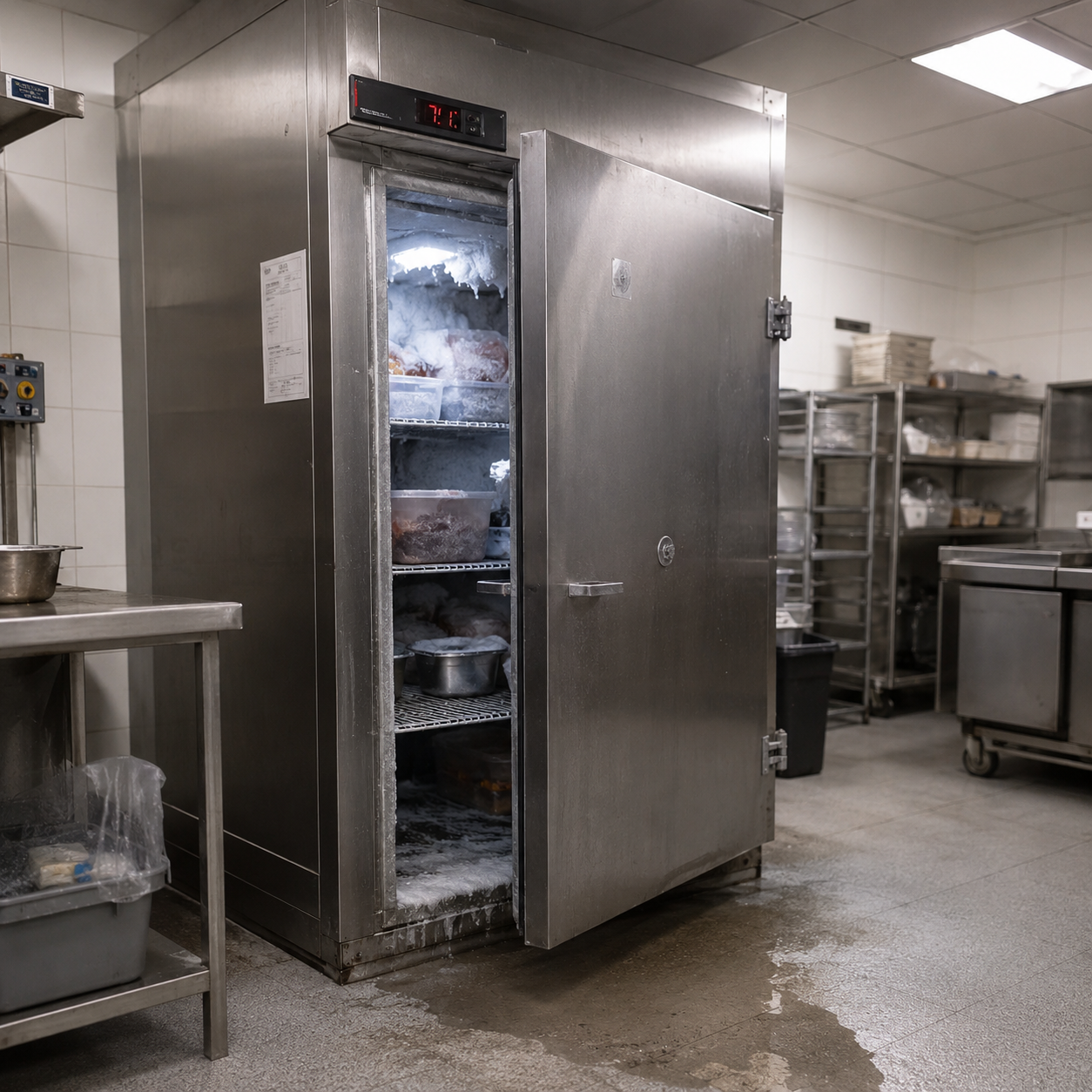
A freezer making weird noises is one of the most common reasons operators organise a refrigeration inspection. For commercial kitchens, hospitality venues, food retail environments and cold storage facilities, an unusual sound from a freezer is not just background noise. It is often an early sign that something inside the system has changed.
The question most people ask first is: why is my freezer making loud noises when it was running quietly before? The answer depends on the type of sound, when it started and whether anything else has changed. Some freezer noises are normal. Others can point to ice build-up, restricted airflow, a failing fan, compressor strain or a part that needs attention.
For businesses relying on consistent cold storage, early diagnosis matters. Professional Commercial Freezer Repairs Perth services can help identify the cause of unusual freezer noises before they lead to temperature loss, equipment failure or stock damage.
This guide explains the most common causes behind a freezer making weird noises, what each sound may mean and when it is time to call a refrigeration technician.
Common Causes of Freezer Noise
When people ask why is my freezer making loud noises, the cause usually comes back to one of a few key issues. The freezer may be working harder than it should, airflow may be restricted, or a moving part may be worn or obstructed.
Common causes include:
- Evaporator or condenser fan motor issues
- Ice build-up interfering with fan blades or airflow
- Dirty condenser coils forcing the compressor to overwork
- Compressor strain or short cycling
- Overstocking or blocked internal vents
- Loose panels, components or rear pipework
- Door seal failure allowing warm air into the cabinet
- The freezer sitting unevenly
- Electrical or relay faults
If you are dealing with a freezer making weird noises, the sound itself often gives the clearest clue about what part of the system is under pressure.
Are Freezer Noises Always a Problem?
Not every sound is cause for concern. A steady low hum when the compressor cycles on is expected. A soft click when the thermostat or defrost timer switches is normal. Gentle gurgling as refrigerant moves through the coils can also be part of normal operation.
What matters is change. If a unit that has always run quietly suddenly becomes loud, develops a new sound or keeps getting worse, it should be checked. The same applies when the noise appears alongside rising cabinet temperatures, excess frost, poor cooling or an unusual smell.
For businesses that rely on refrigeration daily, a freezer making weird noises can signal a system under strain. Left unchecked, that strain can affect temperature stability, energy efficiency, equipment lifespan and the safety of stored stock.
What Different Freezer Noises Could Mean
Buzzing
A freezer buzzing noise can be normal when the compressor is running under load. However, if the buzz has become louder, harsher or more constant, the compressor may be overworking.
Dirty condenser coils are a common cause. When dust and debris build up, the freezer cannot release heat efficiently, so the system runs longer to maintain temperature. A buzzing noise paired with poor cooling should be investigated.
Is a buzzing freezer dangerous? Not immediately, but sustained compressor strain can shorten equipment life and increase running costs. If the unit is not reaching temperature, arrange an inspection.
Hissing
A soft hiss after the compressor shuts off is usually refrigerant settling through the system. This can be normal. But if the hissing is continuous, louder than usual or paired with reduced cooling, it may indicate a refrigerant leak or pressure issue.
Refrigerant faults should always be handled by a licensed technician.
Rattling or Vibrating
A freezer rattling noise often has a physical cause. The unit may not be sitting level, a panel may be loose, pipework may be vibrating or items may be resting against the freezer.
Why is my freezer rattling? In many cases, it is a positioning or clearance issue. Check that the freezer sits evenly on all feet and that nothing is touching the sides, rear or top. If the rattle comes from inside the cabinet, stock may be pressing against internal vents or the evaporator fan may be the source.
Clicking
A soft click at start-up or after a defrost cycle is normal. Rapid, repeated or irregular clicking is not.
This can point to a faulty start relay, compressor issue, thermostat fault or electrical problem. A freezer making a clicking noise without properly starting needs professional attention, especially if it is also struggling to hold temperature.
Grinding or Scraping
A freezer grinding noise is one of the more serious sounds. It usually points to fan blades catching on ice, a fan motor with worn bearings or an obstruction near a moving part.
What does a grinding freezer noise mean? Most often, it means a fan obstruction or bearing failure. Ice around the fan may be caused by a failing door seal, excess humidity or a defrost fault. Continuing to run the unit can damage the motor and increase the cost of repair.
Loud Humming
A steady hum is normal. A freezer humming loudly and persistently is not.
This may suggest an overworked compressor, a failing fan motor or restricted airflow. In commercial units that run continuously, a gradual increase in humming is often one of the first signs that maintenance is overdue.
If you notice a freezer making weird noises with a louder-than-usual hum, check condenser coil access, ventilation clearance and internal airflow. If the humming continues, book an inspection.
Knocking or Clunking
An occasional knock when the compressor starts or stops is not unusual, especially in older units. A repeated knocking sound during normal operation is more concerning.
This can indicate loose components, a deteriorating compressor mount or interrupted refrigerant flow. For commercial freezers under sustained load, persistent knocking should be checked promptly.
Squealing or High-Pitched Sounds
A high-pitched squeal or whine often points to a fan motor bearing wearing out or a fan blade dragging against ice. It may start occasionally and become more constant as the fault develops.
This is one of the clearest early signs that a component is approaching failure.
What You Can Safely Check First
Before calling a technician, there are a few safe checks you can run through:
- Airflow clearance: Make sure there is enough space around the unit, especially at the rear, so heat can escape.
- Internal vents: Move stock away from vents so cold air can circulate properly.
- Door seals: Check for cracks, gaps or areas where the seal has pulled away from the cabinet.
- Ice build-up: Look for excess frost around the back wall or fan housing.
- Levelling: Confirm the freezer sits evenly on all feet.
- Sound location: Note whether the noise comes from the rear, inside, underneath or top of the unit.
- Temperature: A freezer making weird noises that is also struggling to cool is more urgent.
Do not remove internal panels, access the compressor, interfere with wiring or handle refrigerant components. These require a licensed technician.
When to Call a Refrigeration Technician
Should I turn off my freezer if it is making strange noises? Only if you notice a burning smell, electrical odour, visible damage or a serious safety concern. Otherwise, monitor the unit and arrange a professional inspection. Switching it off without a plan can put stored products at unsafe temperatures.
Call a technician when:
- The noise is getting louder or more frequent
- The freezer is not holding its set temperature
- There is a burning, electrical or chemical smell
- The fan is scraping or grinding
- Excessive frost is building up
- The compressor clicks repeatedly without starting
- The unit is short cycling
- Stock temperature is at risk
A freezer making weird noises is often a warning sign, not a complete failure. Acting early can prevent a minor fault from becoming a major repair.
Early Diagnosis Is Always the Better Call
Most unusual freezer noises mean something has changed inside the system. Catching that change early is almost always cheaper than waiting for a breakdown. A door seal fault, blocked coil or worn fan motor can often be repaired before it leads to compressor strain, temperature loss or stock damage.
For hospitality operators, food retailers, commercial kitchens and cold storage facilities, a freezer making weird noises is not a problem to leave for later.
Refrigwest provides refrigeration repairs and servicing for commercial systems. If your freezer is making weird noises and you are not sure what is causing it, the team can inspect the unit, identify the fault and recommend the right repair before it becomes a larger problem.
Contact Refrigwest to book a service inspection.