Split System Not Heating? Common Causes, Defrost Cycles & Repair Signs
On this page
- Why Isn’t My Split System Heating?
- Why Is It Blowing Cold Air?
- Why Does Heating Take So Long to Start?
- Is the Defrost Cycle Normal?
- Why Is the Outdoor Unit Covered in Ice?
- Can Low Refrigerant Affect Heating?
- Could the Reversing Valve Be Faulty?
- Why Does the System Stop While Heating?
- Why Does It Heat One Day but Not Another?
- When Should I Call a Technician?
- Get Your Split System Heating Again
Reverse cycle split systems are one of the most cost-effective ways to heat a home, so it can be frustrating when yours blows cold air on a chilly morning. The cause is not always a fault. Many systems pause their heating during a normal defrost cycle or take a few minutes to warm up, while other problems point to blocked filters, low refrigerant or a failed component. For homeowners searching for help with Split Air Conditioning Perth during winter, this guide explains what is normal, what you can check yourself and when it is time to call a licensed technician.
Why Isn’t My Split System Heating?
Start with the simple checks. Many heating problems are caused by settings or blockages rather than a breakdown.
Things you can check yourself:
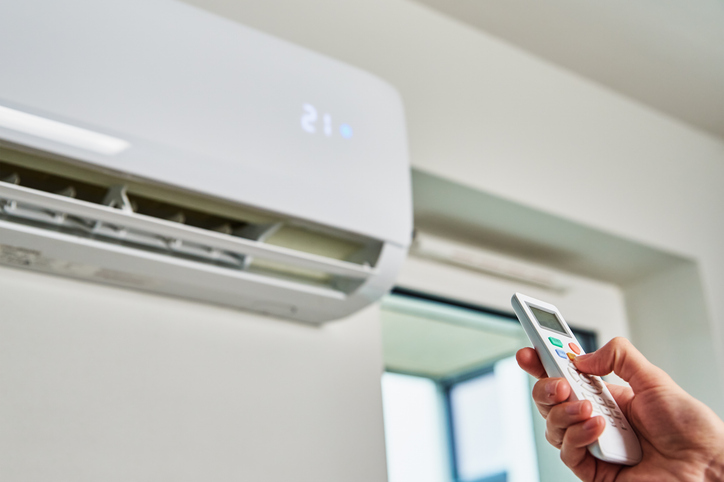
- The mode setting. Make sure the remote is set to heat, not cool, dry, fan or auto.
- The set temperature. The set temperature needs to be higher than the room temperature, for example 20 to 22°C.
- The remote batteries. Weak batteries can stop new settings reaching the indoor unit.
- The air filters. Dirty filters restrict airflow and can significantly reduce heating output.
- The outdoor unit. Check it is running and that nothing is blocking it, such as leaves, plants or stored items.
- The power supply. Check the isolator switch and circuit breaker.
Common faults that stop a split system heating:
- Low refrigerant caused by a leak
- A faulty reversing valve
- A failed outdoor fan motor or capacitor
- A faulty temperature sensor or control board
- An outdoor unit that is iced over and not defrosting properly
If the simple checks do not fix the problem, a technician will need to diagnose the fault.
Why Is It Blowing Cold Air?
A split system blowing cold air in heating mode can be normal for short periods, or it can point to a fault.
Normal reasons:
- The system has just started. It takes a few minutes for the indoor coil to warm up.
- The system is defrosting. During a defrost cycle, heating pauses while the outdoor unit melts ice from its coil.
- The room has reached temperature. Once the set temperature is reached, the system slows down and the air coming out may feel cooler.
Signs of a fault:
- Cold air continues for more than 15 to 20 minutes in heat mode
- The outdoor unit is not running at all
- The system blows cold air and the outdoor unit is covered in ice that does not clear
- The system heats poorly even with clean filters and the correct settings
If cold air continues after the normal warm-up and defrost periods, the system may have a refrigerant, reversing valve or electrical fault.
Why Does Heating Take So Long to Start?
Most split systems take a few minutes before warm air comes out. This is normal and is designed to protect your comfort.
When you switch on heating, the outdoor unit starts first and the indoor coil gradually warms up. Many systems keep the indoor fan off or on very low until the coil is warm enough, so you do not get a blast of cold air. This is often called a hot start or cold draft prevention feature.
Heating may take longer to start when:
- It is very cold outside, so the system has to work harder
- The system has just come out of a defrost cycle
- The filters are dirty and airflow is restricted
- The system is undersized for the room
If you regularly wait more than 10 to 15 minutes for any warm air, it is worth having the system checked.
Is the Defrost Cycle Normal?
Yes. Defrosting is a normal part of how a reverse cycle system works in cold weather.
When the system heats your home, the outdoor coil gets very cold. On cold, damp mornings, moisture in the air can freeze onto the coil. If the ice builds up, the system cannot absorb heat from the outside air, so it switches into a defrost cycle to melt it.
During a defrost cycle you may notice:
- The indoor fan stops and no warm air comes out
- A defrost or standby light on the indoor unit or controller
- The outdoor fan stops while the compressor keeps running
- Steam or water vapour rising from the outdoor unit
- A whooshing or hissing sound as the refrigerant changes direction
- Water draining from underneath the outdoor unit
A defrost cycle typically lasts around 10 minutes, although this varies with the conditions and the model. In cold weather, it may happen roughly every 40 minutes or so.
Avoid switching the system off during a defrost cycle. Let it finish, and heating will resume on its own.
Why Is the Outdoor Unit Covered in Ice?
A light layer of frost on the outdoor unit on a cold morning is normal, and the defrost cycle should clear it.
Heavy ice that does not clear is not normal. It may be caused by:
- A faulty defrost sensor or control board that does not trigger the defrost cycle
- Low refrigerant, which causes the coil to run colder than it should
- A faulty outdoor fan motor, which reduces airflow across the coil
- A faulty reversing valve, which stops the system switching into defrost
- Blocked drainage under the outdoor unit, causing melted water to refreeze
If the outdoor unit stays covered in ice, switch the system off and book a technician. Do not chip or scrape ice off the coil, as this can damage the fins and pipework.
Can Low Refrigerant Affect Heating?
Yes. Refrigerant carries heat from the outdoor unit into your home. If the system is low on refrigerant, it cannot move as much heat, so the air coming out will feel lukewarm or cool.
Signs of low refrigerant include:
- Weak or lukewarm heating, even after a long period of running
- Poor cooling in summer as well
- Ice forming on the outdoor coil or pipework
- A hissing or bubbling sound near the pipes
- Oily marks around pipe joints
A split system does not use up refrigerant over time. Low refrigerant means there is a leak, which needs to be found and repaired before the system is recharged. Refrigerant work must be carried out by a licensed technician.
Could the Reversing Valve Be Faulty?
Yes. The reversing valve is the component that switches the direction of refrigerant flow so the system can change between cooling and heating. If it fails or sticks, the system may:
- Cool when it should be heating
- Only work in one mode
- Fail to switch into a defrost cycle
- Make a loud clunk or hiss without changing mode
A simple test is to check whether the system cools properly in summer but will not heat in winter. If it only works in one mode, the reversing valve or its electrical coil may be at fault.
Reversing valve problems can be caused by a failed coil, an electrical fault or a sticking valve. A technician will test the coil and the system pressures before recommending a repair.
Why Does the System Stop While Heating?
A split system that stops or cycles off while heating may be:
- Defrosting, which is normal and should only last a few minutes
- Reaching the set temperature, which causes the system to slow down or pause
- Overheating because of dirty filters, as restricted airflow can cause the indoor coil to get too hot and trigger a safety shutdown
- Responding to a sensor fault, which can give the control board incorrect readings
- Tripping because of an electrical fault, such as a failing capacitor, fan motor or compressor
If the system stops and shows an error code or flashing light, note the code before calling a technician, as this helps identify the problem faster.
Why Does It Heat One Day but Not Another?
Inconsistent heating is often linked to the weather or to a developing fault.
Weather-related causes:
- Cold, damp mornings cause more frequent defrost cycles, which interrupt heating
- Very low outdoor temperatures reduce how much heat the system can extract from outside air
- Wind and rain can blow onto the outdoor coil and increase frost build-up
Fault-related causes:
- A slow refrigerant leak may allow the system to heat on milder days but struggle on colder ones
- A failing capacitor or fan motor may work intermittently
- A loose electrical connection can cause the system to work one day and fail the next
- A sensor fault may cause the system to misread temperatures under certain conditions
If the problem keeps coming back, book a technician. Intermittent faults are easier to diagnose when you can describe when and how often they happen.
When Should I Call a Technician?
Call a licensed air conditioning technician if:
- The system blows cold air for more than 15 to 20 minutes in heat mode
- The outdoor unit is not running when heating is on
- Heavy ice builds up on the outdoor unit and does not clear
- The system only heats or only cools
- An error code is showing
- You hear loud clunking, grinding or rattling
- The system keeps stopping or tripping the circuit breaker
- Heating has gradually become weaker over time
Before you call, check the mode, set temperature, filters, remote batteries and power supply. If these are fine, the fault needs professional diagnosis.
Repairs to split systems require a full refrigeration and air conditioning licence. A restricted split system installation licence does not cover repairs, so make sure the technician you book is fully licensed.
To reduce the chance of heating problems, clean the filters every two to four weeks during heavy use and book an annual service. A service before winter checks the refrigerant pressures, electrical components and outdoor unit so the system is ready for colder weather.
Get Your Split System Heating Again
A split system that will not heat is often a quick fix, but some faults need a licensed technician to diagnose and repair. Refrigwest repairs and services split system air conditioners across Perth, from Two Rocks to Mandurah and out to the Perth Hills, with 24/7 repairs available.
Call 1300 164 217 to book a split system repair or service.