
A system that’s part of your Evaporative Air Conditioning Perth setup shouldn’t come with an unpleasant smell attached, so it’s understandable to want an answer the moment one turns up. Most smells point to something fairly straightforward, like standing water or pads overdue for a clean, but a few point to something worth acting on quickly.
This guide runs through the most common smells reported with evaporative cooling, what each one usually means, and when it’s a sign to call a technician rather than wait it out.
Why Does My Evaporative Cooler Smell?
Most smells from an evaporative cooling system trace back to water sitting somewhere it shouldn’t, whether that’s in the tray, on the pads, or in the ductwork. Stagnant water, combined with warmth and organic material like dust or algae, creates the right conditions for odour-causing bacteria and mould to develop.
The specific smell can point to different causes, which is why it’s worth identifying exactly what the smell is like before deciding what’s behind it.
Why Does It Smell Musty?
A musty smell is usually linked to mould or mildew developing somewhere in the system, most commonly on the cooling pads or in the water tray. This tends to happen when water sits without being properly cycled or when pads have gone too long without cleaning or replacement.
Musty smells are more common at the start of the season, particularly if the system sat unused with residual water in it over winter.
Why Does It Smell Damp?
A damp smell is often simply a sign of the system doing what it’s designed to do, since evaporative cooling relies on moisture to cool the air. In most cases, a mild damp smell when the system first starts up for the season is normal and fades once the system has been running for a while.
If the damp smell persists well beyond start-up or gets stronger over time, it’s more likely linked to standing water, worn pads, or reduced airflow through the system.
Why Does It Smell Like Stagnant Water?
A stagnant water smell generally means water has been sitting somewhere in the system without being refreshed, most commonly in the tray. This can happen if the bleed-off cycle isn’t working properly, if the system has been sitting unused for an extended period, or if a blockage is preventing water from draining and refreshing as it should.
This smell often improves once the system has run for a while and cycled through fresh water, but a smell that persists points to an issue with water flow rather than just a temporary condition.
Why Does It Smell Like Rotten Eggs?
A rotten egg smell is typically caused by sulphur-reducing bacteria growing in stagnant water within the system, often in the tray or pads. This is more likely to happen after the system has sat unused for a while, particularly over winter, since stagnant water sitting at room temperature creates ideal conditions for this type of bacteria to develop.
Running the system for a while and flushing through fresh water often clears a mild version of this smell, though a persistent rotten egg smell usually points to a service being overdue.
What Does a Burning Smell Mean?
A burning smell is different from the other smells covered here and shouldn’t be treated the same way. This can indicate an overheating motor, an electrical fault, or a belt slipping and generating friction on belt-driven units. Unlike musty or damp smells, a burning smell is a safety-related warning sign rather than a general maintenance issue.
If you notice a burning smell, it’s best to switch the system off and have it inspected before running it again, rather than waiting to see if the smell passes.
Can Dirty Cooling Pads Smell?
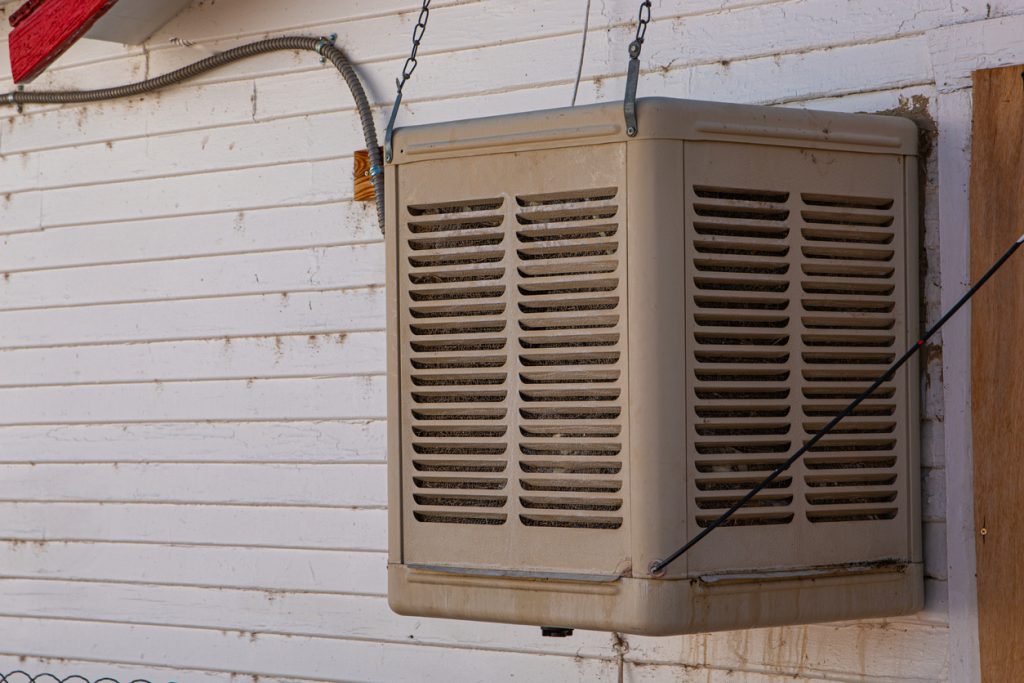
Yes. Cooling pads that have built up algae, mould, or general grime are one of the most common sources of unpleasant smells in an evaporative cooling system. As air is pulled through the pads to be cooled, any odour building up on them gets carried through the ductwork and into your rooms.
Pads in this condition are usually a sign that servicing, cleaning, or replacement is overdue, and addressing the pads directly often resolves the smell entirely.
Does Standing Water Cause Smells?
Yes, standing water is one of the most common underlying causes of smells across all the categories above. Whether it’s sitting in the tray, soaked into old pads, or pooling somewhere in the ductwork, water that isn’t being properly cycled or drained creates the right environment for bacteria, mould, and general odour to develop.
Keeping water moving through the system as intended, and making sure drainage and bleed-off components are working properly, goes a long way toward preventing these smells in the first place.
Can Mould Grow Inside Evaporative Cooling?
Yes. The combination of moisture, warmth, and organic material like dust makes evaporative cooling systems a plausible environment for mould to develop if they’re not maintained properly. This is most likely to occur on cooling pads or in areas where water sits without being refreshed.
Mould growth is generally linked to musty smells and can also affect air quality passing through the system, which is another reason it’s worth addressing rather than ignoring.
Will Servicing Remove the Smell?
In most cases, yes. A standard service that includes cleaning or replacing cooling pads, clearing the water tray, and checking drainage and bleed-off components addresses the majority of causes behind musty, damp, or stagnant water smells. Once the source of the odour is cleaned out or replaced, the smell generally clears within a run cycle or two.
A burning smell is the exception, since that points to a mechanical or electrical issue rather than something a standard clean resolves, and it should be inspected separately.
When Do Cooling Pads Need Replacing?
Cooling pads generally need replacing when they’re cracked, breaking apart, heavily discoloured, or so clogged with debris and mineral build-up that cleaning no longer restores proper function. Pads in this condition are also more likely to be contributing to persistent smells, since a degraded pad holds onto odour-causing material rather than letting it wash away.
As a general guide, most residential systems need pad replacement every few years, though this varies depending on water quality, usage, and how consistently the system has been serviced.
Get to the Bottom of the Smell
Most smells from an evaporative cooling system come down to water sitting somewhere it shouldn’t, or pads that are overdue for attention, both of which are straightforward to fix with a proper service. A burning smell is the one exception worth treating as urgent rather than routine.
Get in touch with our team or call 1300 164 217 if your system has developed a smell.